
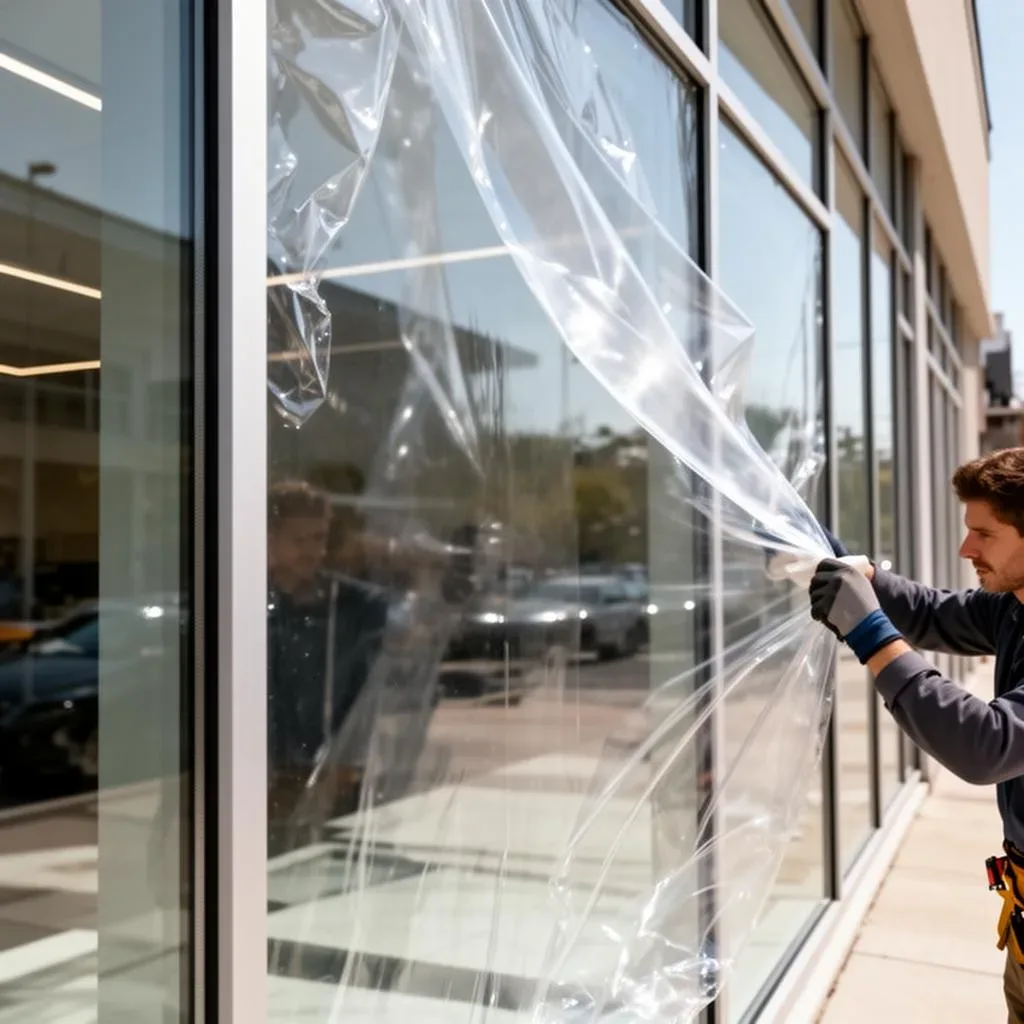
Security film helps hold glass fragments together after breakage and, in suitable tested systems, can delay entry. Anti-graffiti film provides a replaceable layer against surface vandalism such as scratches and etching.
If your window is repeatedly scratched, start with surface protection. If your concern is what happens when someone breaks the glass, start with the performance of the complete opening. A property with both problems needs those two needs addressed separately in the proposal.
The difference at a glance
| Security film | Anti-graffiti film | |
|---|---|---|
| Main purpose | Fragment retention and supported security performance after breakage | Replaceable protection against surface damage |
| What to evaluate | Film, glass, frame, attachment and relevant test results | Substrate compatibility, exposure and removal requirements |
| Ongoing attention | Film condition, attachment and the opening around it | Damage to the surface and replacement of the sacrificial layer |
| Existing damage | Does not repair cracked glass or weak framing | Does not erase scratches or etching in the substrate |
The IWFA guide explains security-film assemblies. 3M and Solar Gard describe their anti-graffiti products. For more detail on each category, read our security-film guide and anti-graffiti-film guide.
A scratched storefront needs a surface assessment
First establish where the marks are: in an existing film, on the glass surface or etched into the glass itself. Replacing damaged film is a different job from restoring damaged glass.
For recurring exterior vandalism, evaluate an anti-graffiti product approved for exterior use on that substrate. The location of the damage tells you which side needs protection. A public-restroom mirror calls for the same reasoning, plus compatibility with the mirror and its surface treatment.
If the glass is already etched, compare restoration and replacement before covering it. A clear protective layer will not make those marks disappear.
A breakage concern needs a look at the whole opening
Security film bonds to the glass. Retaining a broken pane in its frame introduces attachment and framing into the decision. Have the installer identify the proposed assembly and show evidence relevant to the protection being claimed.
Thickness alone will not answer that question. Neither will a demonstration using different glass or a different attachment detail.
For smash-and-grab concerns, review doors and locks at the same time. A filmed pane does little to address an entrance that already pulls open because the latch misses its strike. The panic-bar security guide covers those faults.
School security, ballistic protection and overhead glazing need a qualified design assessment. A building-type label is not enough to specify a retrofit film system.
Using both on the same storefront
An opening with exterior scratching and a separate entry concern may be a candidate for anti-graffiti film outside and a suitable security-film system inside.
The installer needs to check the exact glass construction, coatings, existing treatments and proposed products. The attachment detail and warranty terms belong in that review. Also establish how future replacement of the sacrificial layer will affect the rest of the installation.
The scope should name each product and identify which side of which pane receives it. A line item that says only “security and graffiti protection” leaves too much open to interpretation.
When glass or frame repair comes first
A cracked pane needs assessment and repair, not film as a patch. Damaged framing needs attention before relying on it to retain broken glazing. Where the required performance exceeds what a proposed retrofit supports, evaluate purpose-built glazing with appropriate evidence.
Laminated glass and applied film are different constructions, but neither category name alone establishes a particular security rating. Compare the specified assembly with the actual requirement.
After a break-in, immediate securing takes priority. Use the storefront response plan, then bring protection options into the permanent-repair discussion.
Compare quotes by the work included
Give each bidder the same description of the problem and the same pane locations. Ask the proposal to identify the existing glass, product, application side, preparation and any attachment system. For performance claims, request the supporting evidence.
Then compare removal work, access, curing instructions, care and warranty terms. Those details explain price differences more reliably than the word “protective.”
Keep the product and pane records after installation. Assign someone to report damage and authorize repairs, and include film condition in the maintenance checklist.
Hal's Glass provides security film, anti-graffiti film, mirror services and storefront glass replacement. Request an assessment with photos and a description of the damage or concern. That is enough to begin narrowing the options.