
If you arrive to find broken glass and an open door, stay outside until you know it's safe. Call 911 if someone may still be inside, the incident is in progress or anyone is in danger. Otherwise, follow the local police reporting process.
The repairs come next. First protect people, then document what happened and get the opening secured.
Keep staff away from the damage
Broken glass can remain in the frame as well as on the floor. Damaged doors, wiring and loose materials create other hazards. Don't send an employee through the opening to see what was taken.
Follow police instructions about entering and touching items. If there's a gas smell or another immediate hazard, leave the area and contact emergency services from a safe location.
Save the information before it disappears
Once it's safe and permitted, photograph the whole storefront and close-ups of the damage. Include the frame, locks, hinges and interior damage, not just the obvious broken pane.
Save camera footage and alarm records before they are overwritten. Record the discovery time, police report reference and people notified. Keep the original files with the repair invoices.
Don't delay necessary safety work for a better photograph.
Call for temporary securing
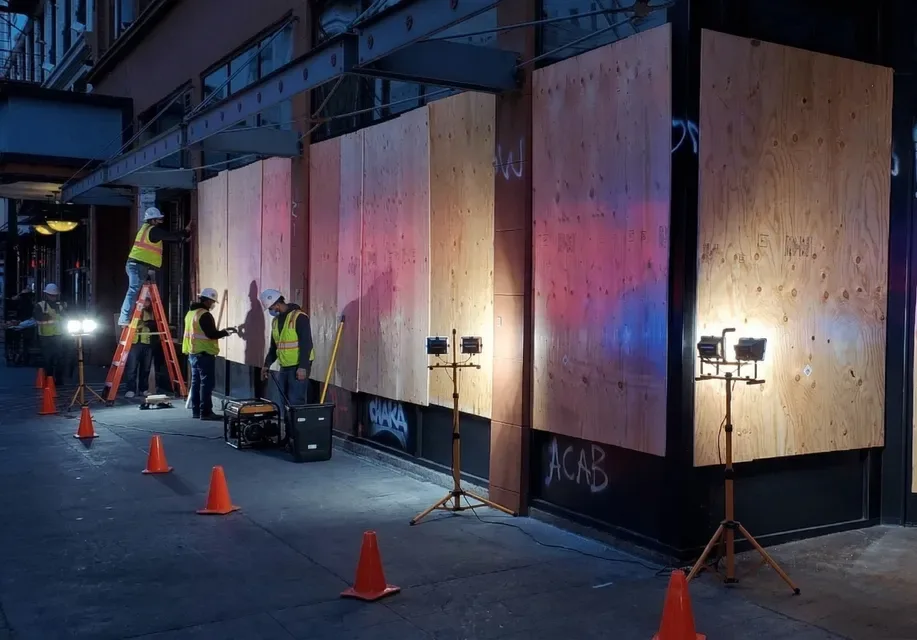
Give the board-up company the address, access contact and current condition of the opening. Tell dispatch if the door won't close or lock, or if the damage affects a required exit or accessible entrance.
The crew needs to know who can authorize work and how to reach that person. Settle the initial scope and approval limit before arrival where possible.
Have both the glass and door checked. Plywood over the pane doesn't fix a bent frame or damaged latch. Measurements for replacement glass can be taken during the visit when the opening is ready for them.
The board-up quote guide explains what belongs in that first scope.
Notify the people responsible for the property
Contact the owner or district manager, landlord, facilities team, insurer and alarm provider as needed. A leased storefront may have specific repair responsibilities and vendor requirements.
If keys or credentials were taken, arrange the appropriate changes through the responsible person. Keep required exit operation intact while securing the building.
For insurance, retain the photos, report details and itemized invoices. Coverage and deductibles come from the policy, so get the carrier's instructions for the claim and emergency expenses.
Don't reopen on the strength of a board-up alone
The scene needs to be released, hazards addressed and required access and exits maintained. A board covering the main entrance may leave a business secure while still making it unsuitable for customers.
Restaurants also need to assess possible glass contamination of food, equipment and preparation areas under their food-safety procedures and local requirements. A quick sweep near the window isn't enough.
Use an appropriately equipped cleanup crew. Check nearby merchandise, mats and fixtures, and keep customers away from the work area. Any alternative entrance needs to be suitable, not simply unlocked.
Move the permanent repair forward
Get a scope for the glass, frame, hardware, film and lettering that need restoring. Separate the expected fabrication time from the installation appointment. Our glass replacement timeline explains where delays arise.
Keep one person responsible for the next update. The emergency job shouldn't disappear from view just because the opening is boarded.
Work may involve both storefront glass and commercial doors. The completion record should identify what was repaired and anything still outstanding.
Review how entry happened
A pane treatment won't solve an unlatched door. A new lock won't correct weak framing. Start with the failure point before choosing upgrades.
Security film is an option for suitable glass-and-frame systems where fragment retention or entry delay is the goal. Anti-graffiti film handles surface vandalism. Neither replaces sound door operation or a response plan.
For future incidents, use the contractor selection guide to establish the vendor relationship in advance.
Incident handoff
| Item | Record |
|---|---|
| Site and manager | |
| Discovery time and police reference | |
| Hazards and access restrictions | |
| Temporary work completed | |
| Approved amount and approver | |
| Insurer and landlord notified | |
| Permanent repair and next update |
For emergency securing, call Hal's Glass at (562) 866-7047. Use the contact page for non-emergency planning.