
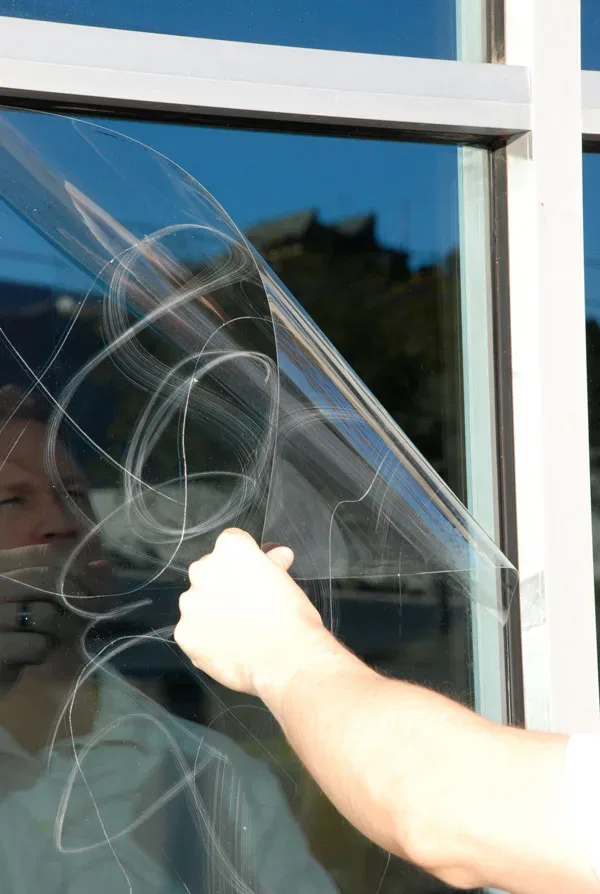
Anti-graffiti film puts a removable protective layer over compatible glass and other specified smooth surfaces. When that layer is scratched or etched, an installer removes it and checks the surface underneath before replacing the film.
For a storefront that repeatedly gets tagged, the appeal is practical: surface damage can become a film-replacement job instead of another glass order. Protection has limits, especially with deep cuts or damage at uncovered edges, but it gives the property another way to manage recurring vandalism.
Why it is called sacrificial film
The film takes damage and is replaced. That is its job.
3M's anti-graffiti product information describes a removable layer for scratches, abrasion and acid etching. Solar Gard's GraffitiGard information identifies compatible surfaces for that product. Product instructions establish where a particular film belongs; the category name alone does not establish compatibility with every finish.
A sacrificial film should not be treated as a forced-entry or glass-retention system without the specific evidence and approval for that use. Security film addresses breakage-related concerns.
Protect the side people can damage
On a street-facing storefront, the exposed outside surface is an obvious place to investigate. In a restroom, the problem might be scratching on the accessible face of a mirror. An elevator panel introduces another question: is the surface glass, coated metal or something else?
Identify the substrate and the damaged side before selecting the film. Exterior use needs a product approved for that exposure. An interior-only roll is not interchangeable just because it looks similar.
Existing coatings, treatments and cleaning methods matter too. For mirror work or storefront glass, have the installer document the surface condition before application. This provides a useful record of what was already there.
Deal with existing damage first
Film will not erase a scratch or fill an etched mark in the glass.
Paint sitting on the surface needs a different assessment from damage cut or chemically etched into the glass. Appropriate cleaning may remove the paint. Deeper damage calls for a decision about professional restoration or replacement before adding protection. The graffiti removal and replacement guide covers those options.
Avoid experimenting with scrapers or chemicals on an unknown coating or film. The wrong cleaning method can add damage to the original problem.
Replacing damaged film
The installer removes the old layer, cleans the adhesive and inspects the exposed substrate. If the underlying surface is sound, the specified replacement film goes on the prepared area. Substrate damage needs its own repair decision.
Many applications are surface treatments that leave the pane in place. Access and edge details determine the work involved. A good quote identifies old-film removal, preparation, disposal and new application, so you know what the replacement price covers.
Agree on how extra work will be approved if removal exposes glass damage. Then get the care instructions, including curing conditions, expected temporary appearance changes and symptoms that deserve a callback.
Decide where recurring protection pays its way
Start with the panes that have an incident history. Record what was damaged, how often work was needed, the repair cost and how long the storefront waited for a replacement.
Compare those records with quotes for initial film installation and later film replacement. That is more useful than a blanket payback claim. A repeatedly damaged street-level pane presents a different decision from an untouched window elsewhere on the same building.
Warranty coverage also needs a careful read. Product defects, installation issues and vandalism are different events. The warranty term does not predict how long the film will remain unmarked.
Keep the product name, installer, application date and protected-pane locations on file. Add peeling edges, visible damage and replacement history to the glass and door maintenance log.
Combining surface protection with security film
A property with both exterior scratching and breakage concerns may use different films on opposite sides of a pane. The glass and products must support that combination, including any existing coatings, sealants and attachment details.
Have the installer specify the combination and its warranty terms. Stacking unrelated films is not a shortcut to broader protection. The security versus anti-graffiti comparison helps organize the two scopes.
Hal's Glass offers anti-graffiti-film services and security-film services. Send photos of the affected surfaces, along with whether the damage is recurring and whether a film is already installed. The first decision is the condition of the surface you are trying to protect.