
Paint and marker usually sit on the surface of the glass. Scratches and acid etching go into it. That difference determines whether you're looking at a cleaning job, a restoration assessment or a replacement pane.
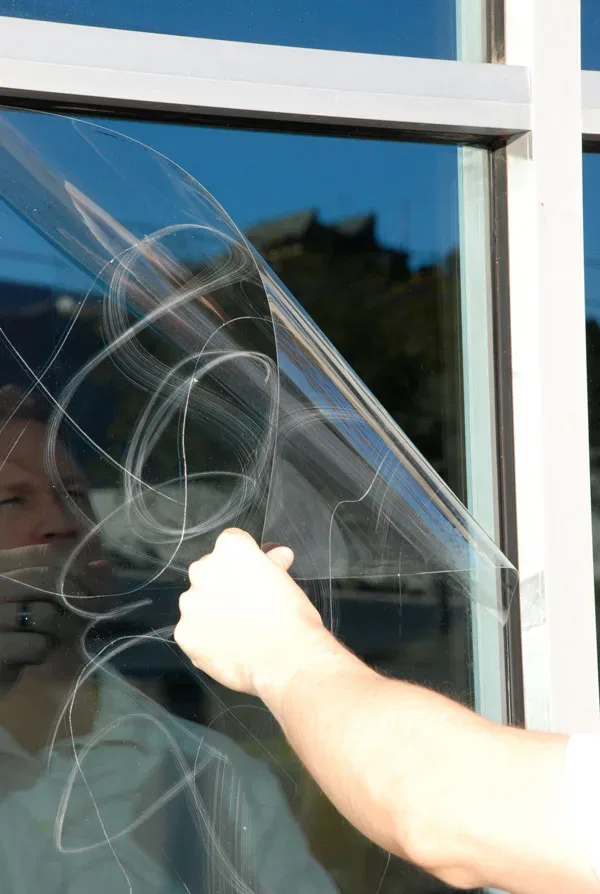
There's one more possibility: the damage is on anti-graffiti film. If the glass underneath is intact, replacing the film takes the marking away without replacing the window.
Start with the damaged surface
| What you see | What it suggests |
|---|---|
| Paint, ink or adhesive on top of the surface | Cleaning may remove it |
| Lines cut into the surface | Scratching, sometimes called scratchiti |
| A frosted or cloudy tag | Possible chemical etching |
| Damage on a visible film layer | Film removal and inspection of the glass |
| Cracks or loose glass | A glass-safety problem as well as vandalism |
Don't run a finger across the marking to test its depth. Broken edges and chemical residue aren't worth touching. Photos are a better starting point, with an on-site assessment for anything that isn't clearly a removable surface mark.
Cleaning is the first option for paint, not for etching
The cleaning method has to suit what's on the window. Bare glass, a coated pane and a filmed surface can react differently to the same cleaner or scraper.
Avoid experimenting with razor blades, abrasives and solvents. Removing the paint won't help if the process scratches the glass or ruins the film. Use the manufacturer's cleaning instructions or have a professional assess a small test area.
Etching is different. No amount of ordinary glass cleaner puts the removed material back.
Is polishing worth trying?
For a small, shallow damaged area, professional restoration deserves a look. Polishing removes material to reduce the mark. The trade-off is the possibility of visible distortion, particularly where the damage is deep or spread across a large area.
Be clear about the result you need. A faint remaining mark in a side window may be acceptable; distortion across a display window may not be. The contractor should explain the likely appearance before treating the pane.
Specialty glass can make restoration worth investigating, especially if a replacement is difficult to source. But a long lead time doesn't make an unsuitable polishing job a good repair.
When replacement is the better conversation
Deep or widespread damage, cracks and damaged coatings all warrant a replacement assessment. Compare the installed job, not a glass-only material price against a full restoration quote.
The replacement scope includes the correct glass, removal, installation, access and disposal. Film and lettering need to be restored separately if they're part of the opening. Our storefront replacement timeline explains that process.
There's no sound rule that every etched pane must be replaced. There's also no reliable way to promise that a scratch will polish out from a photograph alone.
Protecting the repaired glass
For a repeatedly targeted storefront, anti-graffiti film gives you a replaceable surface. The next scratch may be in the film rather than in a newly installed pane.
That protection has limits. Deep gouges and exposed edges can still leave damage underneath. Inspect the glass when the old film comes off.
Some products also suit mirrors. Solar Gard's GraffitiGard guidance lists window and mirror applications, but the selected film still needs to match the surface. A public-restroom mirror deserves the same attention to existing damage and cleaning products as a storefront window.
New film won't hide old etching. Address the existing damage first, then protect the surface. The anti-graffiti film guide covers placement and upkeep.
What about the cost?
Get quotes for the options that are genuinely suitable. For restoration, include the expected finish and any risk of distortion. For replacement, include the entire installed scope. For film, include removal, cleanup and future replacement.
Use your own incident history to judge the value of protection. A location with recurring scratches has a different calculation from a window damaged once. There isn't a universal “pays for itself after two incidents” rule.
Send Hal's Glass photos of the damage, including the whole opening. For a window or mirror that needs replacing, see storefront glass and mirror services.