
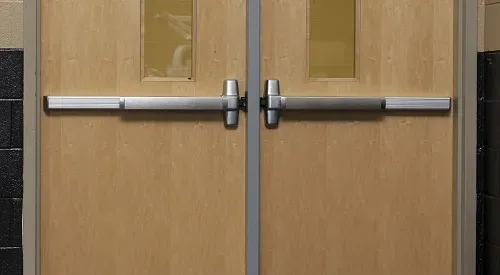
A rim exit device latches at the side of the door. A vertical rod device connects the push bar to latches at the top and, in many configurations, the bottom. That difference affects how the opening is built, how it is serviced and what happens when someone rolls a delivery cart through it.
Start with the door you have. The push bar is only the visible part of the hardware, and replacing it with a different type often involves more than changing a few screws.
Three arrangements you will see on commercial doors
| Type | Where the mechanism sits | What matters during service |
|---|---|---|
| Rim | A side latch engages a strike on the frame or center mullion | Latch alignment, strike attachment and the condition of the mullion |
| Surface vertical rod (SVR) | Rods run along the exposed door face | Rod adjustment, impact damage and debris around floor strikes |
| Concealed vertical rod (CVR) | Rods run inside the door | Existing door preparation and access to internal connections |
Mortise exit devices use a lock body inside the door. Concealed vertical cable devices are another variation. Record the model before ordering parts; similar-looking bars can operate quite different mechanisms.
Rim devices and the center mullion
A rim device is a straightforward arrangement on a compatible single door: press the bar, the side latch retracts and the door opens.
On a pair, two rim devices can latch into a center mullion, the vertical member between the leaves. A removable mullion lets staff open the full width for a planned delivery. It also creates an operational responsibility. Once the delivery is finished, the mullion must be reinstalled correctly so both doors can latch.
Measure the usable opening with the mullion in its normal position when reviewing clear width and egress. The wider delivery opening is not the everyday condition.
The Adams Rite 8800 is an example of a narrow-stile rim device designed for single doors and pairs with a mullion. Its dimensions and specified options still need to match the opening.
Surface rods put the mechanism within reach
Visible rods provide access for service, but they also sit where carts and cleaning equipment can hit them. At the floor, a strike collects debris unless someone keeps it clear. Those details deserve attention on a busy stockroom door.
A bent rod or misaligned door can leave one latch working while the other fails to engage. Pressing the bar and watching the door swing is only half the check. Let it close and verify that it latches, too.
Some openings use a less-bottom-rod (LBR) configuration. This is a specified hardware arrangement, not permission to remove a troublesome lower rod. Rated pairs may need auxiliary fire hardware and other listing conditions. Exposed lower hardware also needs review where accessibility requires a smooth lower door surface.
Concealed rods keep the door face clear
With CVR hardware, the rods sit inside the door. That keeps them out of the path of a cart, but makes the existing door preparation especially important when replacing the device.
The technician needs to identify the internal latches, connections and mounting arrangement. A new bar that looks right on the outside might not connect to the hardware inside. The Von Duprin 98/99 product guide shows why the exact model matters within a single product family.
Concealed hardware also depends on door alignment. If the leaf has dropped on worn hinges, changing the push bar alone leaves the cause in place.
Before converting to another type
A conversion quote should account for the door material, thickness, stile width and existing holes, along with the strikes, outside trim and access control. For pairs, it should explain how both leaves will operate. Fire-rated openings require compatible, listed hardware and permitted modifications.
This is where an inspection earns its value. A recurring latch problem might call for a hinge repair or strike correction instead of a new device type. Our commercial door repair guide explains that decision, and the rated-door guide covers assembly requirements.
There is no security ranking based solely on whether rods are visible. A device needs a sound door, secure attachments and reliable latching. See panic-bar security for the rest of that assessment.
Send useful photos before a service visit
Photograph the full door, push bar, latch edge, visible rods, floor strike and any accessible model label. Include the center mullion if there is one. Leave covers and hardware in place.
Those photos help narrow the parts search. A description such as “left leaf closes but pulls open afterward” is more useful than “panic bar broken.”
Hal's Glass handles commercial doors, hollow metal doors and ADA hardware. Send the opening details for an assessment. If you already have competing proposals, use the hardware brand comparison to check whether they cover the same work.