
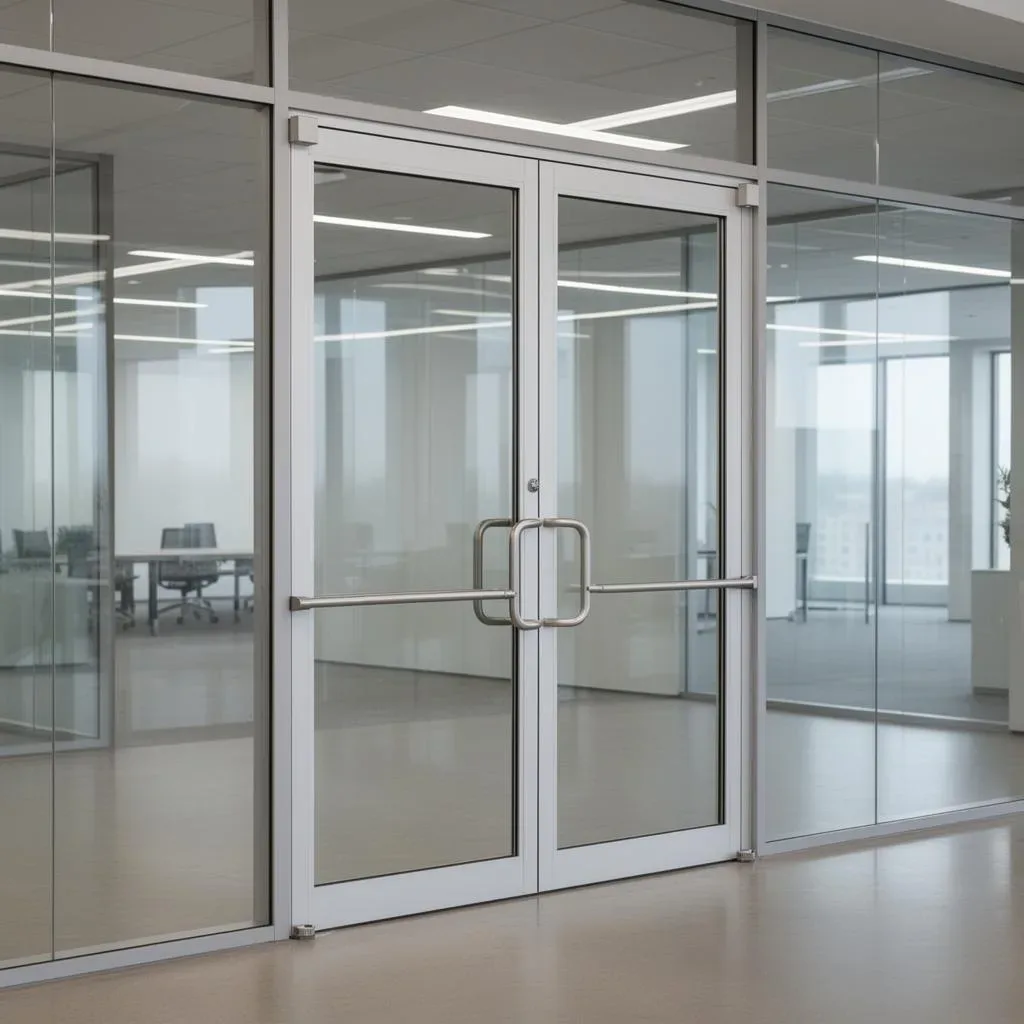
A door that drags across the threshold doesn't necessarily need replacing. The problem could be a worn pivot, a hinge or an opening that's out of alignment. A new closer won't solve any of those.
Repair makes sense when the door and frame are sound and the fault can be corrected with suitable parts. Replacement enters the conversation when the door is twisted, corroded through, damaged at its hardware mounts or unable to support the operation the building needs.
The first job is finding the cause.
A symptom isn't a diagnosis
| Problem | Parts of the opening to inspect |
|---|---|
| Door slams | Closer, mounting, hinges and air pressure |
| Door drags | Pivots, hinges, frame alignment and threshold |
| Lock or panic bar won't latch | Latch, strike, door sag and frame condition |
| Hardware keeps coming loose | Fasteners, mounting and the material supporting them |
| The same fault keeps returning | Previous repairs and the original diagnosis |
Repeated service calls don't automatically mean the door is worn out. They can mean the same underlying problem hasn't been fixed.
If a panic bar won't release for exit, or a fire door won't close and latch, treat that as urgent. It isn't a repair to leave until the next budget review.
What a worthwhile repair looks like
The repair should correct the cause and leave the opening working properly. Replacing a failed closer on a sound door is straightforward in principle. Replacing that closer without addressing a sagging door leaves another problem behind.
A good scope identifies the failed part, the work needed around it and anything being retained. It should also explain an unresolved condition, such as water reaching a steel frame or movement that needs another trade's attention.
You don't need a long technical report. You do need to know what the repair is expected to fix.
When to price a replacement
Significant impact damage, rust through the door or frame, and damaged hardware reinforcement are good reasons to look beyond another adjustment. A change in use can also matter. The existing door may not accept the exit hardware or other equipment the project requires.
“New door” can mean a new leaf in the existing frame or an entirely new opening. Those prices aren't comparable. The quote should identify the frame, hinges or pivots, closer, locking hardware, threshold, glass and finish work included.
Keeping a sound frame can be useful. Keeping a damaged one can preserve the problem.
Don't let a percentage make the decision
The familiar advice to replace when a repair costs half as much as a new door is a budgeting prompt, not a technical rule.
Look at what each option buys. A repair might replace the worn components in an otherwise serviceable opening. A replacement quote might reuse some of those same old components. Or the replacement might address damage that no small repair will solve.
Compare the full installed scopes, timing and warranty. Count likely disruption too, especially if the entrance needs temporary securing while parts or a door are ordered.
Door construction changes the repair
On aluminum storefront doors, pivots, rails, concealed closers and glass all work together. Thin framing also limits hardware choices. If the pane is damaged, include door glass replacement in the assessment.
On hollow metal doors, inspect the bottom edge, frame and hardware reinforcement for corrosion and damage. Steel doesn't automatically mean fire-rated. The labels and building requirements matter. See hollow metal door services.
On wood doors, damaged edges and hinge mounts can affect whether the leaf will hold a repair. Size, finish, preparation and any fire rating belong in replacement planning.
Accessibility belongs in the repair plan
A door that locks isn't necessarily easy to use. After hardware work, opening force, closing behavior and other affected functions need attention.
Our California accessibility guide explains the manual-door basics. The fire-door guide covers rated openings. A hardware service visit isn't a certification of the whole property's accessibility.
Can a leaking closer just be adjusted?
An adjustment doesn't repair failed seals or replace lost fluid. Have the closer inspected and the reason for the failure addressed.
For a Los Angeles property, see local commercial door repair.
For commercial door repair or replacement, send Hal's Glass photos and a description of the problem. Include any previous repairs. ADA hardware service and location coverage are available on the site.