
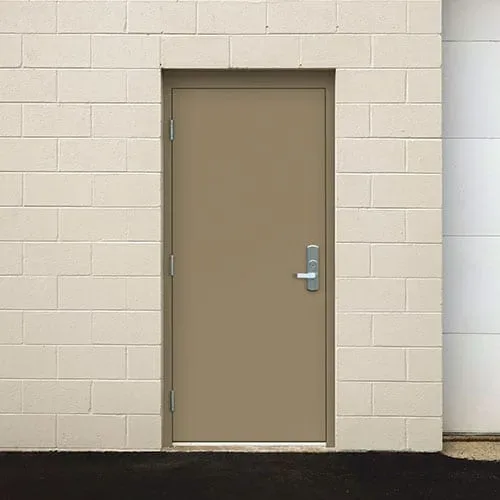
A steel back door and a fire-rated door aren't the same thing. Hollow metal describes how the door is built. A fire rating belongs to an assembly with requirements for the door, frame, hardware and installation.
That difference matters before anyone changes the closer, cuts in a vision panel or replaces a panic bar. Identify the opening first.
“It's only the back door” isn't enough
A rear entrance still needs an accessibility review where the applicable rules cover it. Its use, route and project scope determine the requirements, not the name staff give it.
The U.S. Access Board explains that employee entrances secured by keys, cards or codes can count as public entrances for ADA scoping. California has its own entrance and exit provisions too. A CASp or design professional can establish what applies to the property.
Don't set every steel door to 15 pounds
For required fire doors, California specifies the minimum opening force allowed by the authority, with a ceiling of 15 pounds. That is a limit, not a recommended closer setting.
Other covered manual doors generally have a 5-pound limit, subject to the applicable exceptions. Opening force, release force and closing speed are different checks. Our California door checklist covers the shared measurements, with the California code reference providing the underlying requirements.
If reducing closer force stops the door from latching, keep investigating. A displaced strike, sagging hinges, damaged seals or pressure differences can all be part of the problem.
Inspect more than the door leaf
The assessment needs to include the labels, frame, hinges, closer, latch, clearances and seals. Glass, louvers and added equipment belong in the review as well.
A familiar-looking panic bar isn't necessarily fire exit hardware. A replacement part described as “fire-rated” also needs to suit the assembly where it's being installed. The label on one component doesn't approve every possible combination around it.
Photos of the door and frame labels help the service company prepare. Leave the labels in place and don't paint over them.
Small changes can affect the assembly
A kick plate: Its size, attachment and suitability need review alongside the accessibility surface requirements.
A new vision panel or louver: This isn't a matter of cutting a convenient opening in the leaf. The glazing or ventilation component and its installation need to be permitted for that rated door.
A powered opener: It must work with the door's required closing and latching function. See the operator planning guide.
A hold-open arrangement: An approved automatic system is different from a wedge. Don't prop the door or disable its closer.
Mechanical dogging, which holds an exit-device latch retracted, isn't permitted on fire exit hardware. Electrified arrangements need their own compatible equipment and release behavior.
Keep the inspection record with the door history
NFPA 80 addresses inspection and testing after installation and at least annually for assemblies within its scope. Confirm the adopted requirements with the authority having jurisdiction. NFPA's fire-door guidance explains the inspection context.
The record should identify the opening, findings, repairs and follow-up verification. A store manager noticing a loose closer is useful. It doesn't replace the required qualified inspection.
When a fire door won't close and latch as required, report it promptly. Waiting until next year's inspection leaves the problem in place.
Repairing a damaged hollow metal door
A worn component and corrosion through the bottom of a door call for different repairs. So do surface damage and a frame that has been distorted by forced entry.
Look at the cause, the condition of the frame and any rating requirements before ordering a replacement leaf. The repair-versus-replacement guide helps compare the full scopes.
Not every emergency exit is fire-rated, and not every steel door is an emergency exit. Get those roles clear before choosing hardware.
For hollow metal doors and frames, commercial door repairs or ADA hardware, send Hal's Glass the opening details, including the symptom and safely visible labels.