
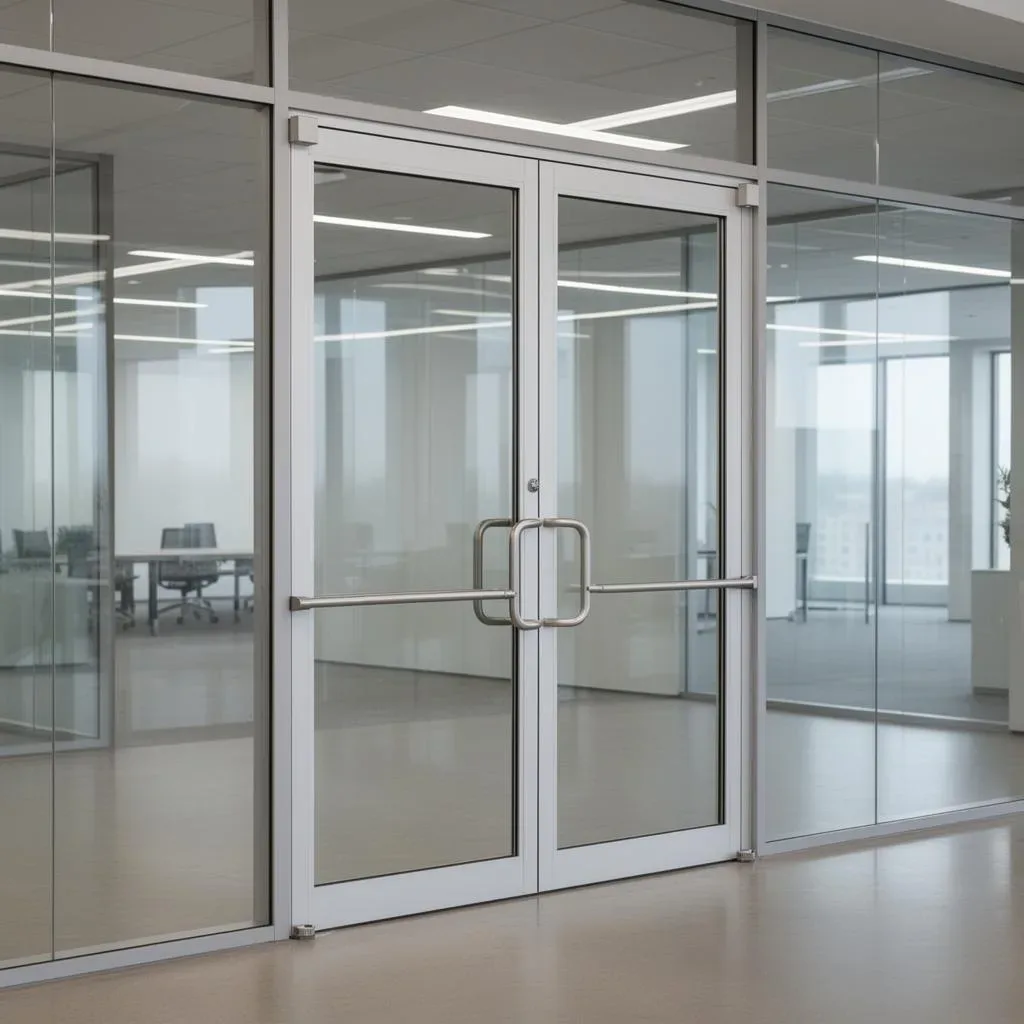
Before buying an automatic opener, find out why the door is hard to move. A dragging door, worn pivot or badly adjusted closer needs attention whether the entrance is manual or powered.
An operator becomes worth considering when the repaired manual door still can't provide the required operation, or when the entrance is being designed for powered access. It isn't a cure for every heavy-door complaint.
Look at what changes during the day
Does the door rub the threshold every time it opens? Is it harder to pull when the kitchen exhaust is running? Does it move freely until the latch catches?
Those details help separate alignment, friction, air pressure and hardware problems. A technician should inspect the complete opening before selecting a new closer or operator.
If the door is twisted or the frame is damaged, use the repair-versus-replacement guide to work through the bigger decision first.
The three operator types
Full-power automatic doors open automatically, often using approach sensors. They need the safety sensing and protection required for that installation.
Low-energy automatic operators move the door at controlled speed and force, commonly after someone deliberately activates a button or other control. They are a different arrangement from a fast-moving automatic entrance.
Power-assist operators reduce the effort needed to move the door while the user still participates in opening it. That distinction matters where maneuvering space is limited.
The referenced standards are ANSI/BHMA A156.10 for full-power automatic doors and A156.19 for low-energy and power-assisted doors. The actual activation method and adopted edition matter. Adding a motion sensor isn't necessarily a simple swap with no other requirements. The U.S. Access Board guide explains the categories.
The button is only one part of the entrance
A person needs to reach the control, activate it and pass through without standing in the door's swing. The opening still needs suitable width, thresholds and power-off operation.
Power-assisted doors retain manual-door maneuvering-clearance requirements. Automatic doors have different provisions involving standby power, egress and whether the door remains open without power. Those details belong in the design review, not in an assumption that automation removes the need for floor space.
Start with the California manual-door checklist, then review the powered arrangement under CBC 11B-404.3 in the California code reference.
About California's 8.5-pound exception
California generally limits opening force on covered exterior hinged doors to 5 pounds. The code includes an exception allowing up to 8.5 pounds at certain other exterior leaves serving the same space when the required powered leaves and related provisions are provided.
The arrangement includes at least one powered leaf for each eight exterior leaves, or fraction of eight, located closest to the accessible route. It also brings control, signage and, at the specified occupancy threshold, backup-power requirements.
Don't apply those details as a universal specification for every operator. Have the designer identify the provision being used before setting actuator heights or battery capacity.
What's involved in adding an operator?
The installation has to work with the door, lock and any access-control system. Someone must also be responsible for the electrical supply and the way the entrance behaves when power fails.
A useful scope covers:
- Repairs to the existing door and its mounting hardware.
- Operator selection and mounting.
- Controls, safety sensing and signage.
- Power and coordination with locks or access control.
- Testing, care instructions and ongoing service.
On a fire-rated opening, the equipment must suit the assembly and preserve its required closing and latching behavior. See the fire-door guide.
Keep it working
Give staff the manufacturer's daily checks and a clear contact for faults. An intermittent button or erratic door movement needs a service call, not a workaround with a wedge or disabled sensor.
Professional inspection and maintenance should follow the requirements for the installed system. The opening also needs a safe, accessible arrangement while a fault is being addressed.
Contact Hal's Glass for a door assessment and describe the problem you're trying to solve. The proposed scope should identify the mechanical door work, ADA hardware work and any operator work involved.