
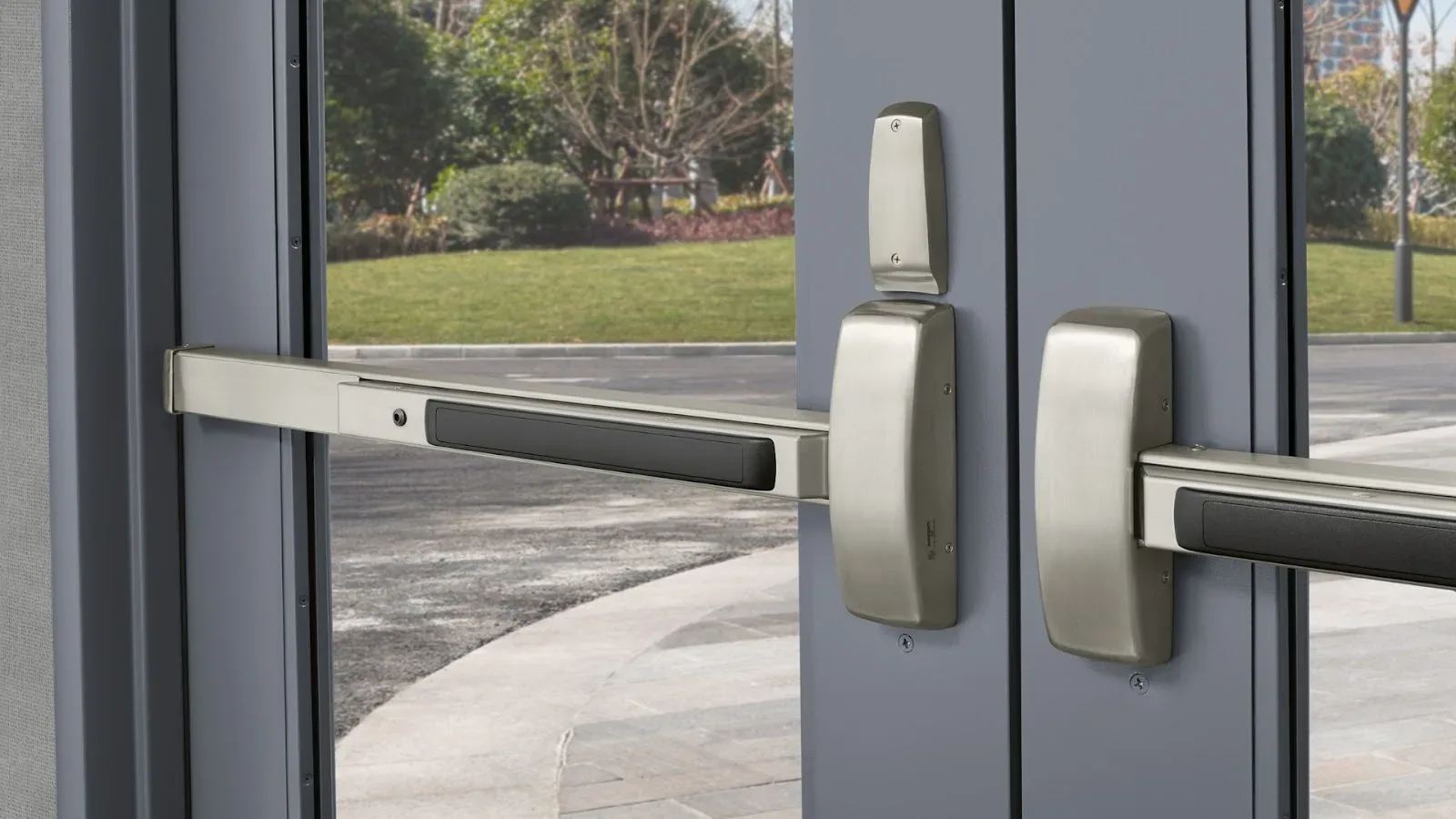
If you have three panic-bar quotes with three different brand names, start by checking whether they describe the same job. One price might cover the device alone. Another might include outside trim, a new strike and work to get the door closing properly.
Von Duprin, Falcon and Adams Rite all offer commercial exit hardware. The useful comparison is between models that fit your opening and provide the required function.
Start with the door, then compare the models
A narrow aluminum storefront stile leaves less mounting room than a wide steel door. Existing holes, internal preparation and strike locations further narrow the options. On a pair, the contractor also needs to account for both leaves and any center mullion.
These product families illustrate the differences:
| Product family | Manufacturer-described application | Details to compare |
|---|---|---|
| Von Duprin 98/99 | Wide-stile, heavy-duty push-pad devices in several configurations | Device type, trim, electrification and required listing |
| Falcon 24/25 | Commercial push-pad families with model-specific configurations | Dimensions, preparation, function and fire-rated options |
| Adams Rite 8800 | Narrow-stile Starwheel rim devices, including storefront applications | Stile dimensions, strike and single-door or paired arrangement |
Use the current Von Duprin specifications, Falcon catalog and Adams Rite product information for the exact models quoted. These examples are not an exhaustive list.
Before comparing prices, establish whether the opening uses rim, surface vertical rod, concealed vertical rod, cable or mortise hardware. The exit-device guide explains how those arrangements work.
What the grade tells you
An ANSI/BHMA grade describes performance under the applicable test requirements. It gives you something more useful than a sales description such as “commercial quality.” It does not tell you how many years a device will last on your particular door.
A delivery entrance used throughout the day has a different workload from a seldom-used exit. Alignment, installation and maintenance matter alongside the device's tested performance.
Keep fire ratings separate in the comparison. A rated opening needs suitable fire exit hardware and a compatible assembly. A familiar brand or performance grade does not establish that suitability. Our fire-door guide explains the distinction. Installed operating force also needs its own accessibility check.
Read the complete installed price
A useful proposal names the device model and function, then identifies the parts being retained and replaced. Look for outside trim, cylinders, strikes, mullions and mounting components. Electrified hardware adds wiring, power supplies and coordination with access control.
Door work belongs in the scope too. If the leaf drags or the closer fails to pull it into the latch, a new bar will not finish the repair by itself. Ask the contractor to explain the cause of repeat failures before approving another replacement. See repair versus replacement.
A lower device price can disappear into extra preparation work. Equally, there is little value in paying for options the opening does not need. Compare the finished, tested opening.
Parts availability matters after installation
For a busy entrance, find out which repair parts are available locally and which need to be ordered. Current lead times are more useful than a general promise that a brand is easy to service.
Record the complete model, including function and electrified options. Do not assume components interchange between brands that share a parent company, or between generations of the same product. Manufacturer documentation should establish compatibility.
For a portfolio, standardize by opening type. Similar storefront doors might share one specification while rated steel doors need another. Keeping that distinction in the hardware schedule makes future repairs easier to scope without forcing an unsuitable device onto an opening.
The direct vendor setup guide covers the door records and approval process that support this approach.
What to send with a quote request
Include photos of the door, bar, latch edge, outside trim and model label. Describe the fault and how people use the opening. Mention access control, a fire label or a removable mullion if present.
Then ask for a model-specific proposal that includes installation and operational testing. That gives you a sound basis for choosing among suitable products without relying on a blanket brand ranking.
Request an assessment for commercial doors, hollow metal openings or storefront systems. If your concern is unwanted entry, the panic-bar security guide explains what else to inspect.
*Brand names identify the products discussed. No manufacturer endorsement or dealer authorization is implied.*