
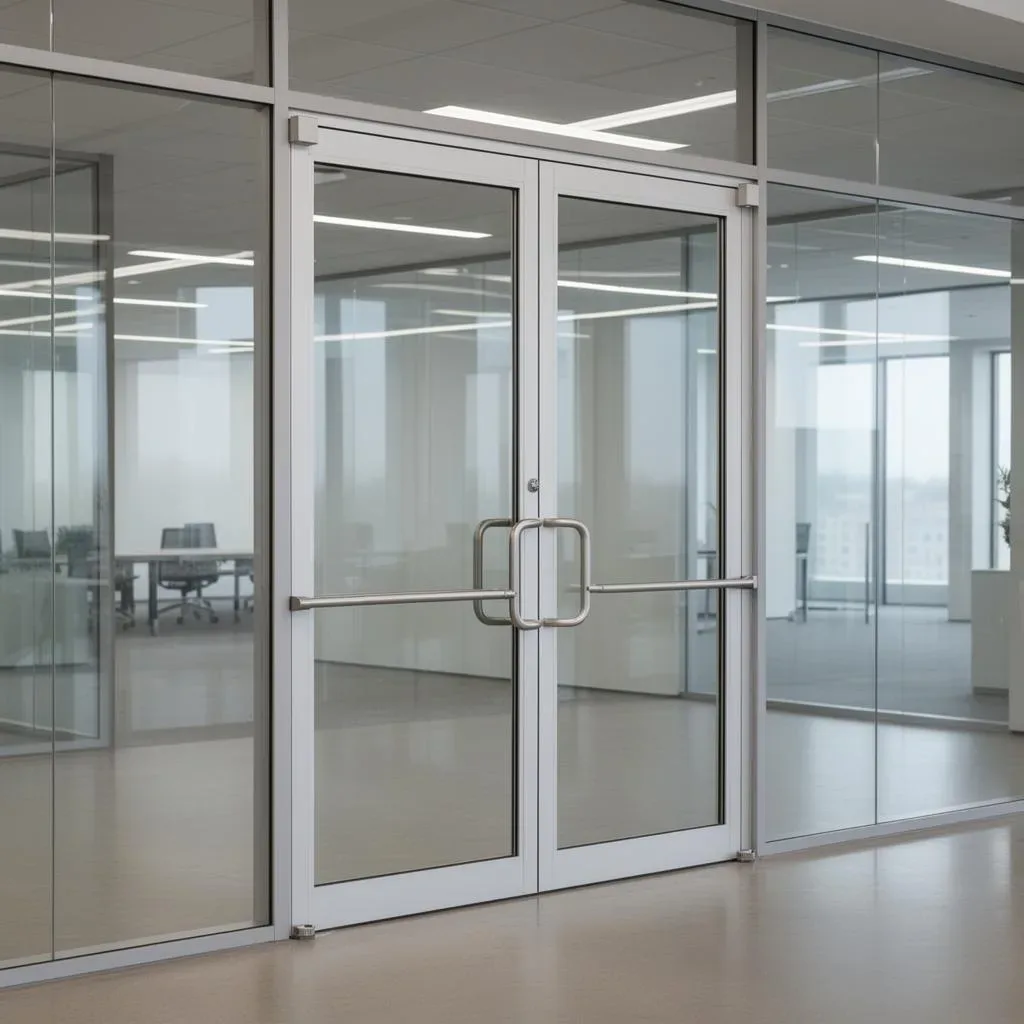
Automatic doors are the most-used equipment in most commercial buildings — hundreds or thousands of cycles a day at a hotel, grocery, medical office, or retail entrance. They're also the equipment customers notice only when they stop working. This guide covers the types of commercial automatic doors, the accessibility and safety rules that govern them, and the maintenance that prevents a failed entrance.
Types of automatic commercial doors
| Type | Common use | What fails most |
|---|---|---|
| Automatic sliding doors | Hotels, grocery, retail, medical | Belts, rollers, sensors, header motors |
| Automatic swinging doors | Office, restroom access, ADA entrances | Operator arms, pivots, actuators |
| Automatic folding doors | Narrow openings, corridors | Pivot hardware, guide tracks |
| Low-energy operators on manual doors | ADA upgrades on existing entrances | Closer/operator coordination, push plates |
The right type depends on traffic, opening width, and whether the door must also serve as an accessible entrance. Sliding doors dominate high-traffic retail; low-energy swing operators are the standard retrofit for accessibility.
The standards that govern automatic doors
Two ANSI/BHMA standards cover nearly every commercial automatic door in California:
- A156.10 — full-power automatic doors, like the sliding entrances at a supermarket. These require presence sensors, safety beams, and specific approach clearances because the door moves with enough force to injure.
- A156.19 — low-energy operators, the kind activated by a push plate at an accessible entrance. Slower, lower force, but with strict requirements for opening force, hold-open time, and actuator placement.
Both standards call for a daily safety check by the property — sensors, approach area, and door behavior — plus periodic professional inspection. If your entrances haven't had a documented inspection, that gap matters after any incident at the door.
Where the ADA fits
Automation is one way to make an entrance accessible, but it isn't the only way — and it isn't always the right first move. A door that drags or slams needs repair before it needs an operator, and an operator installed on a failing door inherits every problem the door already had.
For the decision between closer repair and automation, see our guide to ADA door operators in California. For the manual-door requirements the opening must meet either way — width, force, closing speed, hardware height — see the California ADA door checklist. Hal's Glass installs and services ADA-compliant door hardware and operators.
The maintenance that prevents failures
Most automatic door failures announce themselves weeks in advance. A planned service visit catches them before the entrance goes down:
- Belts and drive components — wear, glazing, and tension on sliding operators
- Sensors and safety beams — drift, contamination, and alignment
- Rollers, tracks, and guides — the mechanical path the door travels every cycle
- Breakaway hardware — the emergency feature that lets a sliding door swing out; it must reset correctly every time
- Actuators and push plates — response, placement, and signage
- Opening and closing behavior — speed, force, and hold-open time against the standard
Between service visits, the daily check takes a manager two minutes: walk the approach, activate the door, watch a full cycle, and confirm the safety sensors stop the door. A door that hesitates, shudders, or reverses unexpectedly is telling you something.
Repair the operator or replace it?
Operators from major manufacturers — Stanley, Horton, Record, and similar — are usually worth repairing: belts, motors, controllers, and sensors are all replaceable components. Replacement enters the picture when parts are discontinued, the operator has repeated failures, or the door itself is at end of life. We service the major brands across Southern California and can usually diagnose a problem operator in a single visit.
How often should automatic doors be professionally serviced?
High-traffic entrances — hotels, grocery, medical — benefit from service every six months. Lower-traffic accessible entrances can run annually, alongside the property's daily safety checks.
Can an existing manual door be automated?
Often, yes. A low-energy operator can be added to many existing swing doors if the door, frame, and pivots are sound and there's power at the opening. An assessment tells you whether the door is a candidate or needs work first.
What causes most automatic door breakdowns?
Worn drive belts, dirty or misaligned sensors, and impact damage to breakaway hardware account for the majority of service calls — all catchable in routine maintenance.
Hal's Glass services automatic sliding and swinging doors, operators, sensors, and breakaway hardware across Los Angeles, Orange, Riverside, and San Bernardino Counties — including 24/7 response when an entrance fails at a hotel or retail property. Call (562) 866-7047 or schedule an automatic door assessment. For planned entrance work, see our commercial door services.