
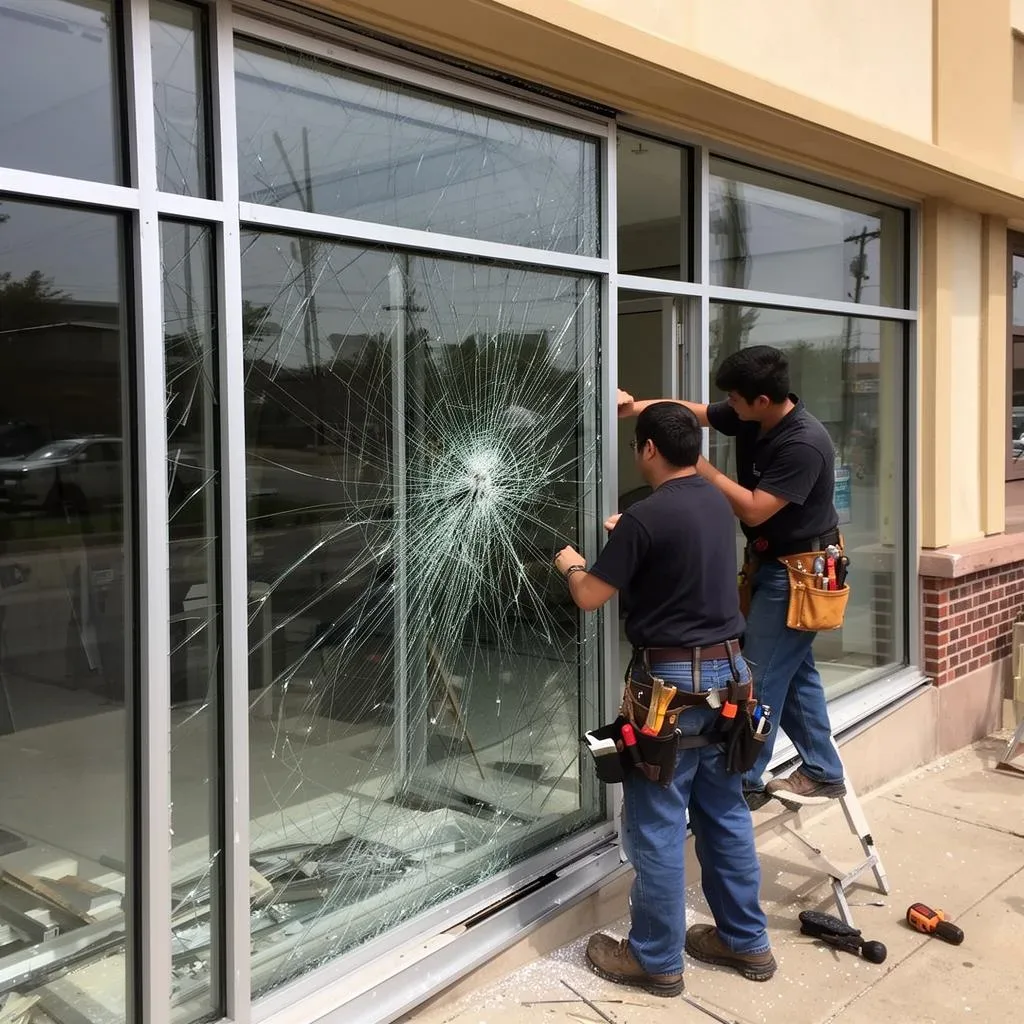
Choosing the right glass for your commercial storefront is one of the most important decisions you'll make as a property owner or manager. Tempered glass and laminated glass are the two most common options for commercial applications in Southern California, and each has distinct advantages depending on your priorities — whether that's security, safety compliance, energy efficiency, or cost.
What Is Tempered Glass?
Tempered glass (also called toughened glass) is heat-treated to be 4–5 times stronger than standard annealed glass. When it breaks, it shatters into small, relatively harmless pebble-like pieces rather than dangerous shards. This makes it the standard choice for:
- Storefront glass doors and entrance systems
- Sidelite panels adjacent to commercial doors
- Any glass in high-traffic commercial areas
- Glass required by California building codes in hazardous locations
What Is Laminated Glass?
Laminated glass consists of two or more glass layers bonded with a polyvinyl butyral (PVB) or ethylene-vinyl acetate (EVA) interlayer. When broken, the glass fragments adhere to the interlayer, keeping the panel intact. This is the technology behind security glass, hurricane glass, and smash-and-grab resistant glazing.
Security: Laminated Glass Wins
For businesses concerned about break-ins, smash-and-grab theft, or forced entry, laminated glass is the superior choice. Even when struck with a heavy object, the interlayer holds the glass together, creating a barrier that takes significantly more time and effort to breach. Many retail stores, jewelry shops, banks, and pharmacies across Los Angeles and Orange County are upgrading to laminated storefront glass for this reason.
Safety Compliance: Both Work
Both tempered and laminated glass meet ANSI Z97.1 and CPSC 16 CFR 1201 safety glazing standards required by California building codes. The choice depends on the specific application and whether you need the added security benefits of laminated construction.
Sound Reduction
Laminated glass offers significantly better sound insulation than tempered glass. For businesses on busy streets in downtown Los Angeles, Hollywood, Santa Ana, or along major Southern California corridors, laminated glass can reduce exterior noise by 3–5 decibels more than tempered glass of the same thickness.
UV Protection
The PVB interlayer in laminated glass blocks up to 99% of UV radiation, protecting merchandise displays, flooring, and interior furnishings from sun damage. This is especially valuable for west-facing storefronts in Southern California that receive intense afternoon sun. Adding commercial window tint can further enhance UV and heat rejection.
Cost Comparison
Tempered glass is typically 20–40% less expensive than laminated glass of the same size and thickness. For budget-conscious projects where security isn't the primary concern, tempered glass delivers excellent performance at a lower price point.
Our Recommendation
At Hal's Glass, we typically recommend tempered glass for standard commercial storefronts, office partitions, and interior glass doors. We recommend laminated glass for businesses in higher-risk areas, those with previous break-in history, or properties requiring enhanced security glazing. For the best of both worlds, tempered laminated glass combines the strength of tempering with the security of lamination.
Need help choosing? Call Hal's Glass at (562) 866-7047 for a free consultation. We've been installing commercial glass across Southern California since 1946.