
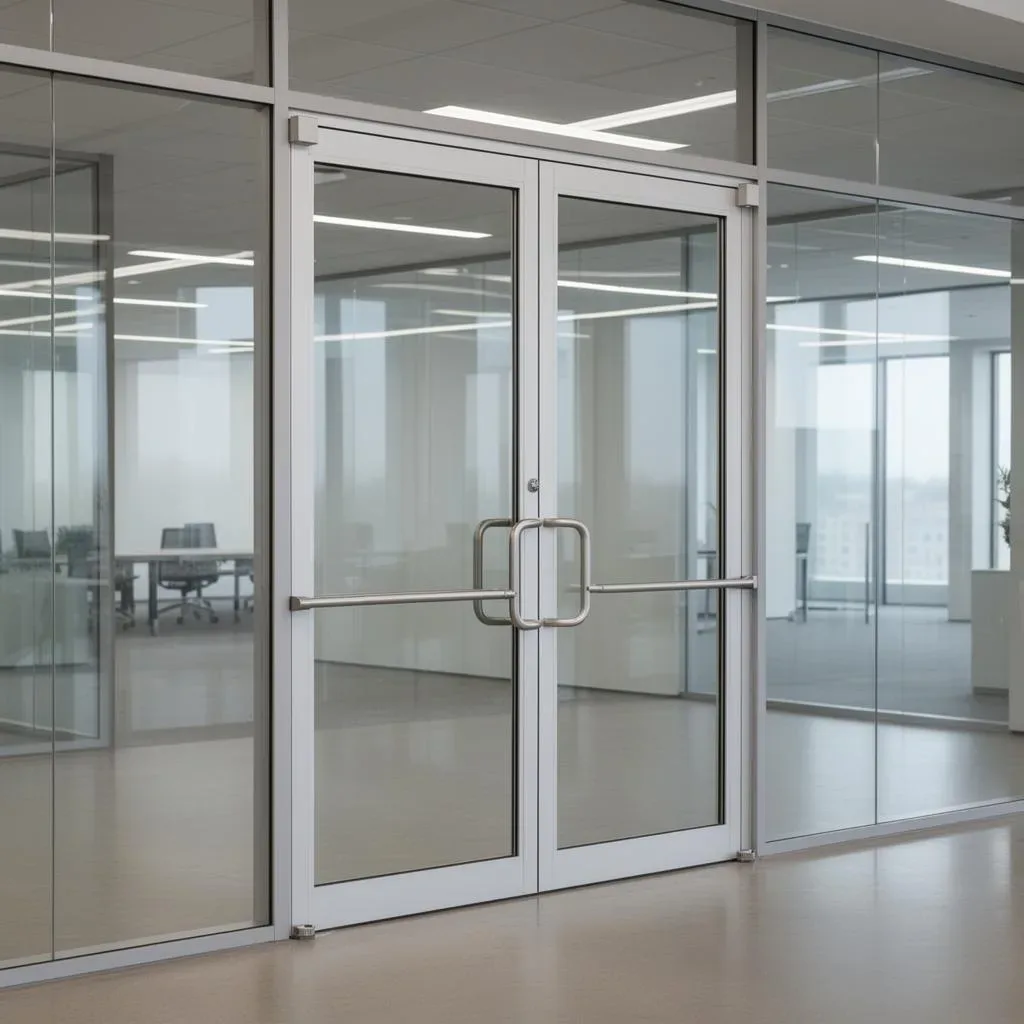
After a commercial break-in, the obvious damage is the shattered glass. But one of the most common — and frequently overlooked — problems is a storefront door that won't latch properly. This creates an ongoing security vulnerability and can violate fire code and ADA requirements. Here's why it happens and what to do about it.
Common Cause #1: Bent Door Frame
Forced entry often bends or torques the aluminum storefront door frame or hollow metal frame. Even a slight warp of 1/8" can prevent the latch bolt from engaging the strike plate. This is especially common with narrow stile aluminum doors used in many Southern California retail storefronts.
A professional commercial door technician can assess whether the frame can be straightened or needs replacement. At Hal's Glass, we carry standard aluminum storefront frame profiles and can often make same-day repairs.
Common Cause #2: Damaged Door Closer
The commercial door closer controls the speed and force of the door's closing action. During a break-in, the closer arm, bracket, or internal mechanism often gets damaged. Signs of a failing door closer include:
- Door slams shut instead of closing smoothly
- Door doesn't close completely — stops a few inches from the frame
- Hydraulic fluid leaking from the closer body
- Closer arm is bent or detached from the door or frame
We install and service all major brands of commercial door closers including LCN, Norton, Dorma, and Yale.
Common Cause #3: Misaligned Panic Hardware
If your commercial door uses a panic bar (also called a crash bar or exit device), the force of a break-in can misalign the latch bolt relative to the strike. Rim exit devices, vertical rod exit devices, and concealed vertical rod systems all have precise alignment requirements. Even minor shifts can prevent proper latching.
Common Cause #4: Damaged Pivots or Hinges
Storefront glass doors typically use top and bottom pivots rather than traditional hinges. A hard impact can damage the pivot shoe, pivot pin, or the header pivot bracket, causing the door to hang unevenly and preventing the latch from aligning with the strike.
Common Cause #5: Warped or Broken Glass Stop
The glass stop (the narrow piece holding the glass in the door) can get bent during a break-in. If the replacement glass is installed without addressing a warped stop, it can put uneven pressure on the door, causing it to twist and preventing proper latching.
The Professional Fix
A complete post-break-in door assessment should evaluate:
- Frame alignment — check for square with a level and tape measure
- Door closer function — test closing speed, latching speed, and backcheck
- Panic device operation — verify latch engagement and smooth release
- Lock cylinder function — test keyed locking from both sides
- Pivot and hinge condition — check for play, looseness, or binding
- Weatherstripping and seals — replace if compressed or torn
Hal's Glass: Full-Service Commercial Door Repair
Since 1946, Hal's Glass Co. has provided complete commercial door repair services across Long Beach, Anaheim, Orange County, Riverside, and San Bernardino County. We repair and replace storefront doors, commercial door hardware, panic devices, door closers, hollow metal doors and frames, and aluminum storefront systems. Call (562) 866-7047 for fast, professional service.