
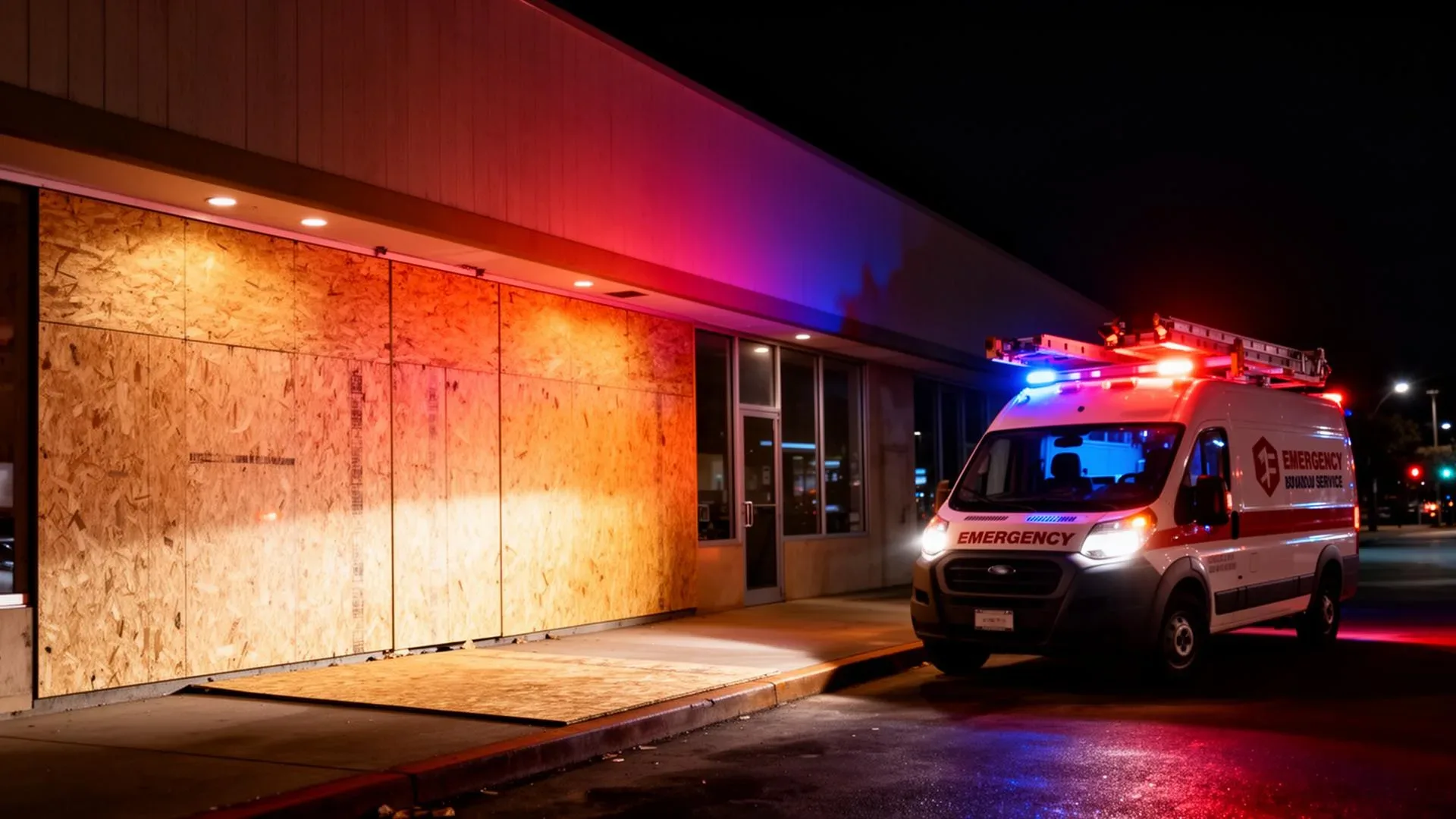
Filing an insurance claim after a commercial break-in can be overwhelming. Between the shock of the event, the urgency of securing your property, and the paperwork involved, many Southern California business owners miss critical documentation steps that can delay or reduce their payout. This guide walks you through exactly what you need.
Why Documentation Matters for Commercial Glass Claims
Insurance companies require proof of damage, proof of loss mitigation (like emergency board-up), and detailed repair estimates before approving a commercial property damage claim. Incomplete documentation is the #1 reason claims get delayed or denied for storefront glass damage, broken commercial doors, and vandalism repairs.
Step 1: Photograph and Video Everything
Before any cleanup or board-up service, document the scene thoroughly:
- Wide-angle shots showing the full extent of broken storefront glass
- Close-ups of damaged door frames, panic hardware, door closers, and lock cylinders
- Photos of any damaged aluminum storefront framing or hollow metal frames
- Interior damage photos showing debris spread and any damaged merchandise or fixtures
- Timestamp your photos — most smartphone cameras do this automatically
Step 2: Secure the Property with Professional Board-Up
Insurance policies require you to take reasonable steps to prevent further damage. Professional emergency board-up satisfies this requirement. At Hal's Glass, we provide itemized invoices for all board-up services that are formatted for insurance submission — including labor, materials, after-hours surcharges, and trip charges.
Keep all receipts. Emergency board-up costs are almost always covered as part of your commercial property insurance claim.
Step 3: Get a Detailed Repair Estimate
Your insurance company will want a professional estimate for permanent repairs. A thorough commercial glass repair estimate should include:
- Glass type and specifications (tempered, laminated, insulated, low-E)
- Glass dimensions and thickness
- Storefront frame repairs or replacement
- Commercial door hardware — panic bars, closers, hinges, locks
- Labor for glazing, installation, and cleanup
- Any required security film or anti-graffiti film upgrades
Step 4: File the Claim Promptly
Most commercial insurance policies have reporting deadlines. File your claim as soon as possible and provide your police report number, photos, board-up invoice, and repair estimate together. The faster you submit a complete package, the faster your adjuster can process the claim.
Step 5: Work with Your Glass Contractor
An experienced commercial glass contractor like Hal's Glass has worked with hundreds of insurance claims since 1946. We can:
- Meet with your adjuster on-site to walk through the damage
- Provide supplemental estimates if the adjuster's initial scope is incomplete
- Coordinate directly with your property management company
- Schedule permanent glass replacement to align with claim approval
Common Claim Pitfalls to Avoid
Don't clean up before documenting. Don't accept the first adjuster estimate without having your glass contractor review it — adjusters frequently underestimate commercial glass costs, especially for specialty items like insulated glass units, security laminated glass, or custom hollow metal door frames.
Serving Southern California Since 1946
Hal's Glass Co. has helped thousands of commercial property owners across Los Angeles, Orange County, Riverside, and San Bernardino navigate the insurance process after break-ins and vandalism. Call (562) 866-7047 for 24/7 emergency board-up and insurance-ready documentation.